

Answer
A 20-yard bin generally costs less than a 30-yard bin and suits medium-sized projects like kitchen remodels or large cleanouts, while a 30-yard bin provides more volume for major construction or demolition jobs. The primary tradeoff lies in upfront cost versus capacity, where choosing a larger bin than needed can result in unnecessary expense. You Junk It… I Dump It helps clients select the appropriate size to avoid overpaying for unused space.
Overview
Choosing the correct bin size for debris removal can simplify project management and reduce costs. This article explores the specifics of 20-yard and 30-yard bins, including their dimensions, ideal applications, and pricing factors. It also presents a labeled real-world hypothetical about Marcus’s renovation project, offering a business recommendation.
The following sections cover various aspects to consider when selecting a bin:
- Bin Dimensions: Compare the physical attributes of 20-yard and 30-yard bins.
- Waste Volume: Learn how to accurately estimate debris for bin sizing.
- Real-World Example: Marcus’s project shows how to manage bin rental costs.
- Larger Bin Need: Identify projects where a 30-yard bin is essential.
- Project Selection: Find help for bin size selection.
- Our Recommendation: Discover why You Junk It… I Dump It recommends bin options.
20 vs 30 Yard Bin Dimensions
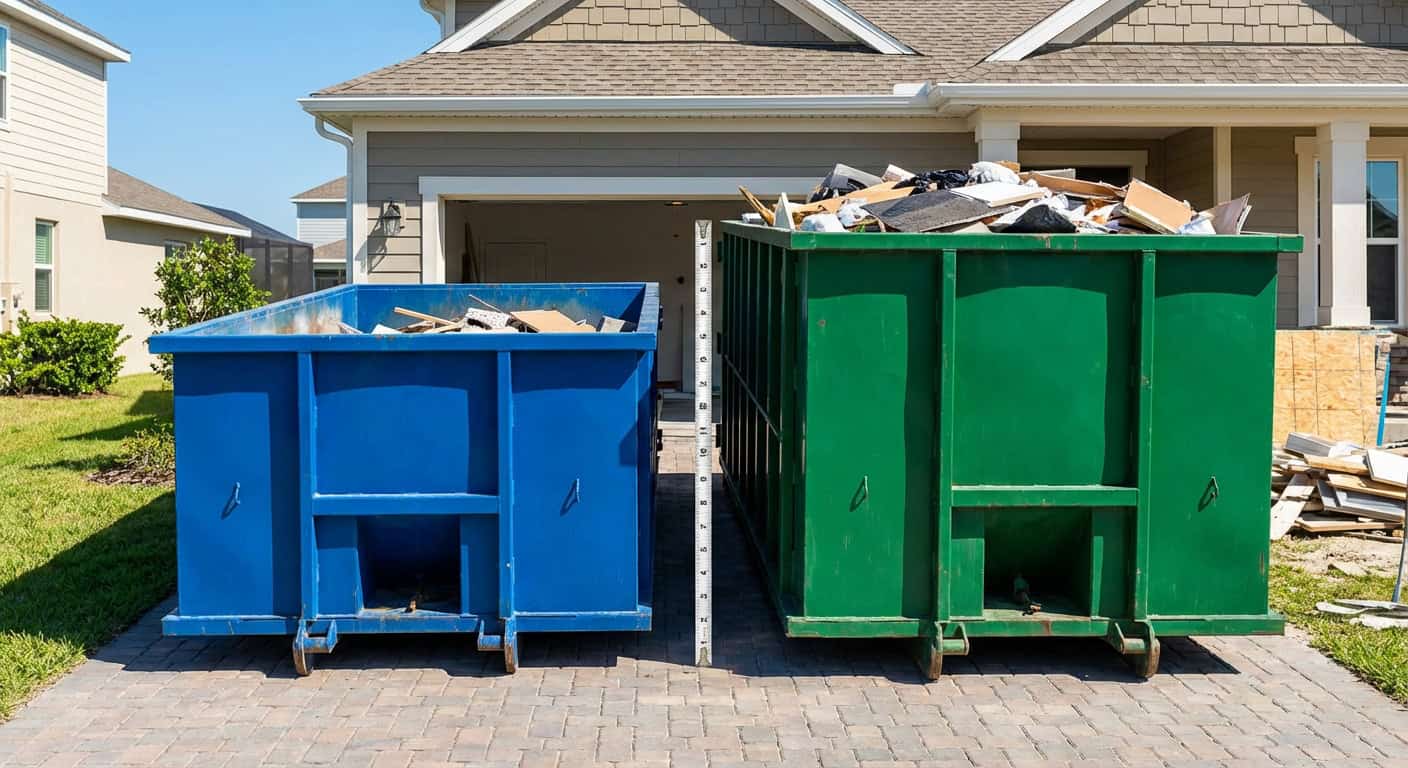
Bin sizing affects project efficiency and cost, making physical dimensions a key factor in selection. A 20-yard bin provides ample space for mid-sized projects, while a 30-yard bin offers greater volume for larger undertakings.
You Junk It… I Dump It finds that many clients benefit from visualizing the actual footprint of each bin before making a decision. Knowing the general length, width, and height helps determine placement on a property and ensures enough capacity for debris.
| Bin Type | Capacity | Typical Length | Typical Width | Typical Height |
|---|---|---|---|---|
| 20 Cubic Yard Bin | 20 cubic yards | 20 feet | 8 feet | 3.5 feet |
| 30 Cubic Yard Bin | 30 cubic yards | 20 feet | 8 feet | 5.5 feet |
Estimating Waste Volume For Bin Size
Project size directly influences the ideal bin. Correctly estimating your waste volume helps select a container that avoids both overfilling charges and paying for unused space. A visual assessment of debris piles or a rough calculation based on project scope provides a clearer picture.
When dealing with varied materials like demolition debris, converting physical items into cubic yards simplifies the process. Knowing the approximate volume beforehand makes for a smoother rental experience. This also helps plan for appropriate disposal, as certain materials might require specific handling. Bin Sizing assists clients in this process.
Waste Volume Estimation Steps
- Categorize materials: Separate waste into distinct types such as construction debris, yard waste, or household junk.
- Measure pile dimensions: For loose debris, estimate length, width, and height of the pile in feet, then multiply to get cubic feet.
- Convert to cubic yards: Divide the total cubic feet by 27 to find the equivalent cubic yards (since 1 cubic yard = 27 cubic feet).
- Account for density and compaction: Heavy materials like concrete or soil will fill a bin faster by weight, while bulky but light items like furniture may take up more volume than weight. Expect some materials to settle and compact once loaded, potentially allowing for more waste than initially apparent.
- Consider project progression: If your project will generate waste over time, factor in the accumulation rate to determine if a single bin or multiple smaller bins are needed.
You Junk It… I Dump It recommends adding a buffer to your estimate, as projects often generate slightly more waste than anticipated. This helps prevent the need for an additional bin or extra trips. Our Clients often find that slightly overestimating is safer than underestimating volume. Our Clients frequently consult with us to finalize their bin selection.
Comparing 20 and 30 Yard Bin Rental Costs
Bin rental costs involve more than just the initial fee; disposal fees and potential overage charges also factor in. Choosing the appropriate size at the outset helps manage project expenses and avoids unexpected costs. We see that clients often face a decision between upfront cost and sufficient capacity when planning their waste removal.
The primary tradeoff lies in upfront cost versus capacity. Marcus is a homeowner planning a significant home renovation.
Marcus is undertaking a major kitchen remodel and needs to dispose of significant renovation waste. He’s unsure whether to opt for the more economical 20-yard bin or the larger 30-yard option to ensure he doesn’t have to order a second bin.
Recommendation: 30-Yard Bin Rental
You Junk It… I Dump It recommends a 30-yard bin for major renovation projects like Marcus’s. This size provides ample volume for construction debris, potentially avoiding the need for a second rental and the associated extra costs and delays.
| Cost Factor | 20 Cubic Yard Bin | 30 Cubic Yard Bin |
|---|---|---|
| Base Rental Fee | Typically lower, making it attractive for smaller budgets. | Higher initial fee due to increased capacity. |
| Disposal Fees | May include a set weight limit; charges apply if exceeded. | Often includes a higher weight limit, but overages cost more per ton. |
| Overage Charges | Per-ton rate for weight exceeding the included allowance. | Higher per-ton rate for exceeding the larger allowance. |
| Delivery/Pickup | Standard delivery and pickup included in the base fee. | Standard delivery and pickup included. |
| Additional Days | Daily fees apply after the initial rental period. | Daily fees apply after the initial rental period. |
Selecting the right bin size impacts total project costs, so reviewing comparing bin rental prices and conditions is helpful. We help our clients decide between a 20 cubic yard and a 30 cubic yard bin by assessing their project’s waste volume and material type. This ensures they get the most cost-effective solution for their specific needs, preventing additional trips or charges.
When a 30 Yard Bin is Essential
A 30-yard bin becomes the practical choice for projects generating significant volumes of waste, typically exceeding the capacity of smaller options. This larger size is often necessary for extensive demolition work or major construction activities.
You Junk It… I Dump It recommends considering a larger bin when dealing with debris from multiple rooms or full structural removals. Opting for a 30 cubic yard bin from the start avoids the need for multiple pickups or overfilling smaller containers, which can lead to additional costs or delays for projects like large commercial cleanouts. You Junk It, I Dump It|Reliable Junk Removal
This bin size offers greater dimensions, typically around 22 feet long, 7.5 feet wide, and 6 feet high. These measurements provide ample space for bulkier items and larger quantities of material.
| Project Type | Waste Volume and Characteristics |
|---|---|
| Major Home Renovations | Full kitchen or bathroom gut-outs, multiple room remodels. These projects produce debris like cabinetry, flooring, drywall, and fixtures. |
| Construction Demolition | Debris from tearing down walls, garages, or small structures. Materials often include concrete, wood, metal, and roofing shingles. |
| Commercial Cleanouts | Clearing out large office spaces, retail stores, or warehouses. This can include old furniture, shelving, electronics, and general waste. |
| Large Landscape Projects | Extensive yard clearing, tree removal, or major garden overhauls. This includes branches, stumps, soil, and other green waste. |
| Estate Cleanouts | Removing contents from an entire house, including furniture, appliances, and personal belongings. This project generates significant volume, making a 30 cubic yard bin a good option for efficient disposal. 30 Cubic Yard |
Choosing the Right Bin Size for Your Project
Selecting the correct bin size prevents overspending on unused space or needing a second rental. Homeowners and contractors determine the right container for their cleanup or demolition by assessing the type and volume of debris.
Consider whether the project generates primarily bulky but light waste, like brush, or dense, heavy materials, such as concrete or dirt. Incorrectly estimating waste volume can lead to additional fees or project delays. You Junk It… I Dump It helps with bin sizing to make sure the container meets job demands.
For example, smaller renovation projects might fill a 20 cubic yard bin, while large-scale construction often needs the capacity of a 30 cubic yard option. Weighing these factors helps select a cost-effective container.
| Project Type | Recommended Bin Size |
|---|---|
| Small cleanouts (e.g., garage, basement) | 20 Cubic Yard |
| Medium renovations (e.g., kitchen, bathroom) | 20 Cubic Yard |
| Large demolition or construction debris | 30 Cubic Yard |
| Extensive landscaping or commercial cleanouts | 30 Cubic Yard |
| Mixed waste (heavy & light) from larger jobs | 30 Cubic Yard |
Why You Junk It… I Dump It Recommends 20 or 30 Yards
Selecting the correct bin size prevents overspending and ensures enough space for project waste. You Junk It… I Dump It guides clients through this selection based on their specific project requirements. We prioritize providing the appropriate capacity for each job.
For most residential cleanouts or smaller renovation jobs, a 20-yard bin often provides sufficient volume. Larger construction debris or significant demolition tasks typically warrant the extra capacity of a 30-yard bin. Our experience shows that matching bin size to project scope improves efficiency for our clients.
Consider the project scale and material types before deciding between a 20 vs 30 yard bin. Choosing the right bin size impacts both cost and project timeline. You Junk It… I Dump It offers guidance for projects ranging from home renovations to major construction, ensuring you get the right fit.
| Best for | Option |
|---|---|
| Small-to-Medium Renovations | 20 Cubic Yard Bin |
| Large Home Cleanouts | 20 Cubic Yard Bin |
| Single-Room Remodels | 20 Cubic Yard Bin |
| Major Construction Debris | 30 Cubic Yard Bin |
| Whole-House Demolition | 30 Cubic Yard Bin |
| Commercial Site Clearances | 30 Cubic Yard Bin |
FAQ
Still weighing your options between a 20 vs 30 yard bin? This section addresses common questions to help you make an informed decision for your project’s waste disposal needs.
| Question | Answer |
|---|---|
| What are the main differences in physical size between a 20-yard and a 30-yard bin? | A 20-yard bin typically measures 20 feet long, 8 feet wide, and 3.5 feet high. In contrast, a 30-yard bin shares the same length and width but stands taller at 5.5 feet high. This difference in height accounts for the increased volume. |
| How should I estimate the waste volume for choosing between a 20 and 30-yard bin? | To estimate waste volume, categorize your materials and measure the dimensions of loose debris piles in feet to calculate cubic feet. Divide cubic feet by 27 to get cubic yards. Consider material density and compaction, and add a buffer to your estimate as projects often generate more waste than initially expected. |
| When is a 30-yard bin the better choice over a 20-yard bin? | A 30-yard bin is the practical choice for projects generating significant waste volumes, such as major home renovations, full structural demolitions, large commercial cleanouts, or extensive landscaping projects. These tasks typically produce more debris than a 20-yard bin can hold. |
| How do rental costs compare between a 20-yard and a 30-yard bin? | A 20-yard bin generally has a lower base rental fee, while a 30-yard bin has a higher initial cost due to its increased capacity. Both bin types may have disposal fees and overage charges if weight limits are exceeded, though the 30-yard bin often includes a higher weight allowance. |